Ecoprint Art in Jogja: Exploring the Philosophy of Natural Colors & the Best Workshops
Tim Redaksi Kriyanesa
November 4, 2026
Getting Closer to Ecoprint Art and Its Philosophy in Yogyakarta
Yogyakarta always holds a magical space for lovers of art and culture. Behind the grandeur of temples and court traditions lies a textile craft that is on the rise: ecoprint. Unlike conventional batik, which uses a canting and wax, ecoprint is a technique for printing natural motifs directly onto fabric using the shapes and natural pigments of leaves, flowers, or stems.
This art is not merely aesthetic; it is a form of deep dialogue between humans and nature. Every piece of ecoprint fabric produced is unique—a handmade one-of-a-kind work that can never be replicated exactly, even by its maker. In Jogja, the environmental conservation movement through this craft is growing rapidly, making it a leading destination for travelers who want to learn directly from local artisans.
“Ecoprint teaches us to slow down, listen to nature's whispers, and capture the traces of plant life on a piece of cloth with full awareness.”
Understanding the Making Techniques: Pounding vs Steaming
In the world of ecoprint, two main methods are often taught in Jogja ecoprint workshop sessions. Each technique offers its own visual characteristics, texture, and challenges for beginners and cultural collectors alike.
1. Pounding Technique
The pounding technique, often simply called pounding, is the most intuitive and beginner-friendly approach. Fresh leaves or flowers are placed on the fabric and gently hammered with a wooden mallet until the pigments and anatomical shapes of the leaves transfer onto the fabric fibers.
- Characteristics of the Result: Produces very sharp and expressive leaf-vein details.
- Perfect Medium: Well suited to lightweight cotton or medium-sized canvas tote bags.
- Experience Sensation: Offers immediate sensory satisfaction through the rhythmic tapping sound during the creative process.
2. Steaming Technique
The steaming technique is a more complex method that produces deeper, longer-lasting colors. Leaves are arranged on fabric that has undergone mordanting (pre-treatment), then the fabric is rolled tightly around a pipe or wooden rod, tied securely, and steamed for several hours.
- Characteristics of the Result: Colors penetrate more deeply into the yarn fibers (rich natural color formation from tannins).
- Perfect Medium: Ideal for luxurious silk shawls or premium rayon scarves.
- Experience Sensation: Teaches patience, because the final result can only be seen after steaming and untying are complete.
Best Types of Leaves for Ecoprint
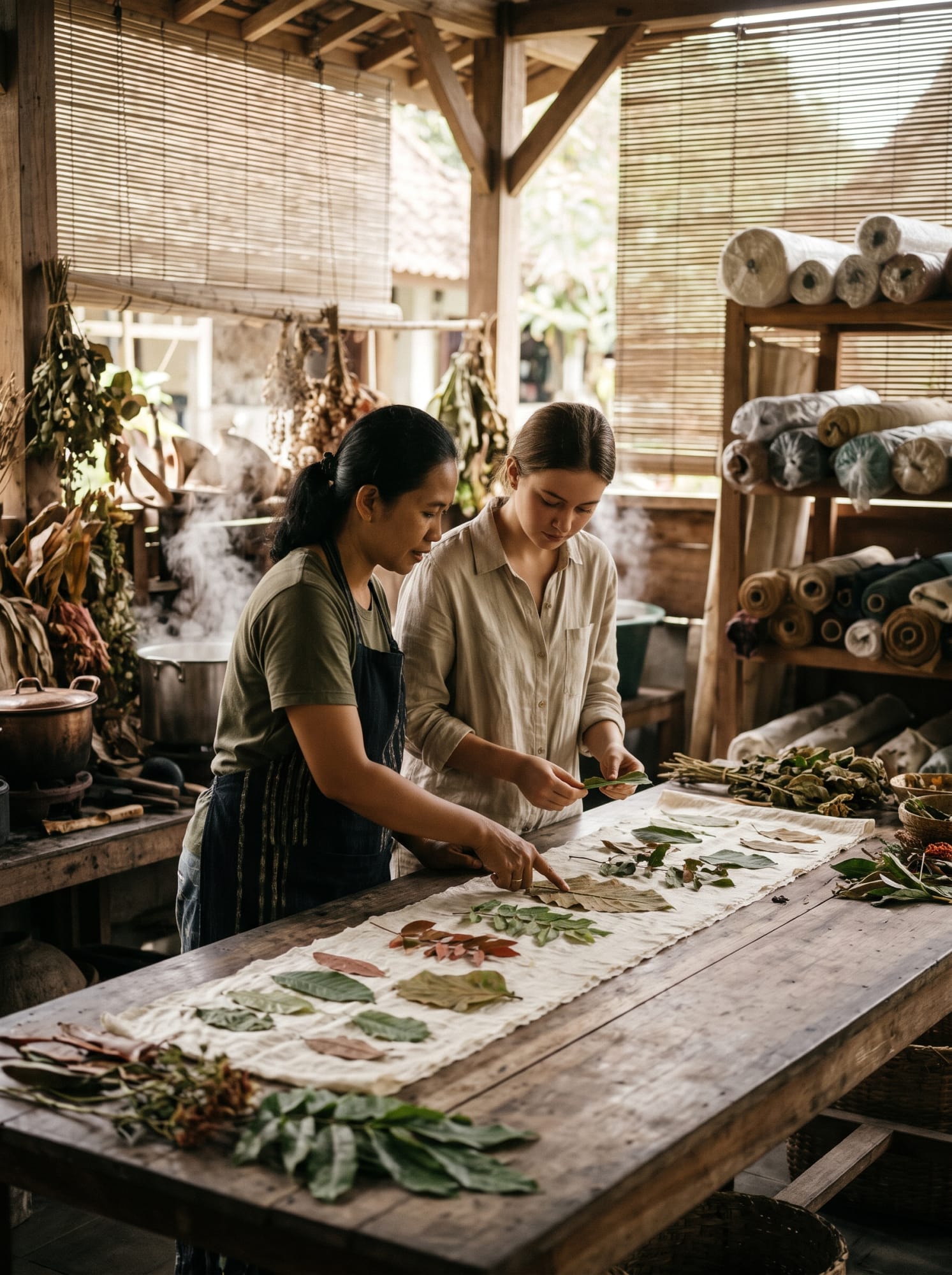
Not all plants can leave beautiful pigment traces on fabric. Choosing local vegetation is the key to a successful ecoprint piece. In Yogyakarta, artisans often use tropical flora that is easy to find yet rich in tannins.
- Teak Leaves: The star of the ecoprint world. They produce a powerful, elegant brick-red to brown color.
- Jarak Pagar Leaves: Have an exotic palmate shape, with highly artistic prints of leaf veins.
- Kenikir and Butterfly Pea Flowers: Add touches of bright yellow to purplish blue that create contrast and enrich the fabric's color palette.
- Bungur and Chaya (Japanese Papaya) Leaves: Alternative leaves often relied on for their stable tannin colors after fixation.
The Experience of Joining an Ecoprint Workshop in Jogja with Kriyanesa
Joining an ecoprint workshop is not just about learning a handicraft technique; it is also a form of educational tourism that soothes the soul. With Kriyanesa, you will be connected directly with experienced local artisans in Yogyakarta's craft centers.
- Introduction & Brief Theory Session: Understand fabric types (natural fibers such as silk, cotton, and linen) and the importance of the mordanting process (preparing fabric so colors adhere perfectly).
- Seeking Inspiration (Garden Exploration): Walk through the garden with artisans to identify leaf types and harvest them responsibly.
- Hands-on Practice (Pounding/Steaming): Design the visual layout of leaves on the fabric, then execute it using your chosen technique.
- Color Fixation: The process of locking in color using alum, tunjung (ferrous sulfate), or slaked lime so the motifs do not fade when washed.
What Can You Take Home?
Every workshop participant is guaranteed not to go home empty-handed. You will take home an authentic handmade work of your own, such as an exclusive ecoprint scarf made of rayon/silk or an eco-friendly canvas tote bag ready to accompany your daily activities.
Tips for Caring for Ecoprint Fabric So It Lasts
Fabric made with natural dyes and the ecoprint technique requires special care so its beautiful colors do not fade easily. Here is a practical guide to caring for your ecoprint collection:
- Use a Gentle Detergent: Wash ecoprint fabric with lerak (soapnut) or a mild liquid body soap with a neutral pH. Avoid harsh synthetic detergents.
- Hand-Washing Method: Never wash ecoprint fabric in a washing machine. Simply soak briefly and gently rub it by hand.
- Avoid Direct Sunlight: When drying, turn the fabric inside out and place it in a shaded, breezy spot so the natural leaf colors are not damaged by overly harsh UV rays.
- Iron at Medium Heat: Iron the fabric while it is slightly damp, or place a cloth over it and use a medium heat setting.
Interested in weaving stories and creating art from Jogja's nature? Secure your seat in Kriyanesa's curated authentic craft workshop program and experience for yourself the peace of creating meaningful work.
Creative Experiences Now Open
More creative experiences with local artisans in Yogyakarta