15 Flowers Perfect for Pressed Flower Art and How to Choose Them
Tim Redaksi Kriyanesa
November 25, 2026 · 3 min read
Understanding the Art of Pressed Flowers and the Importance of Choosing Dried Flowers
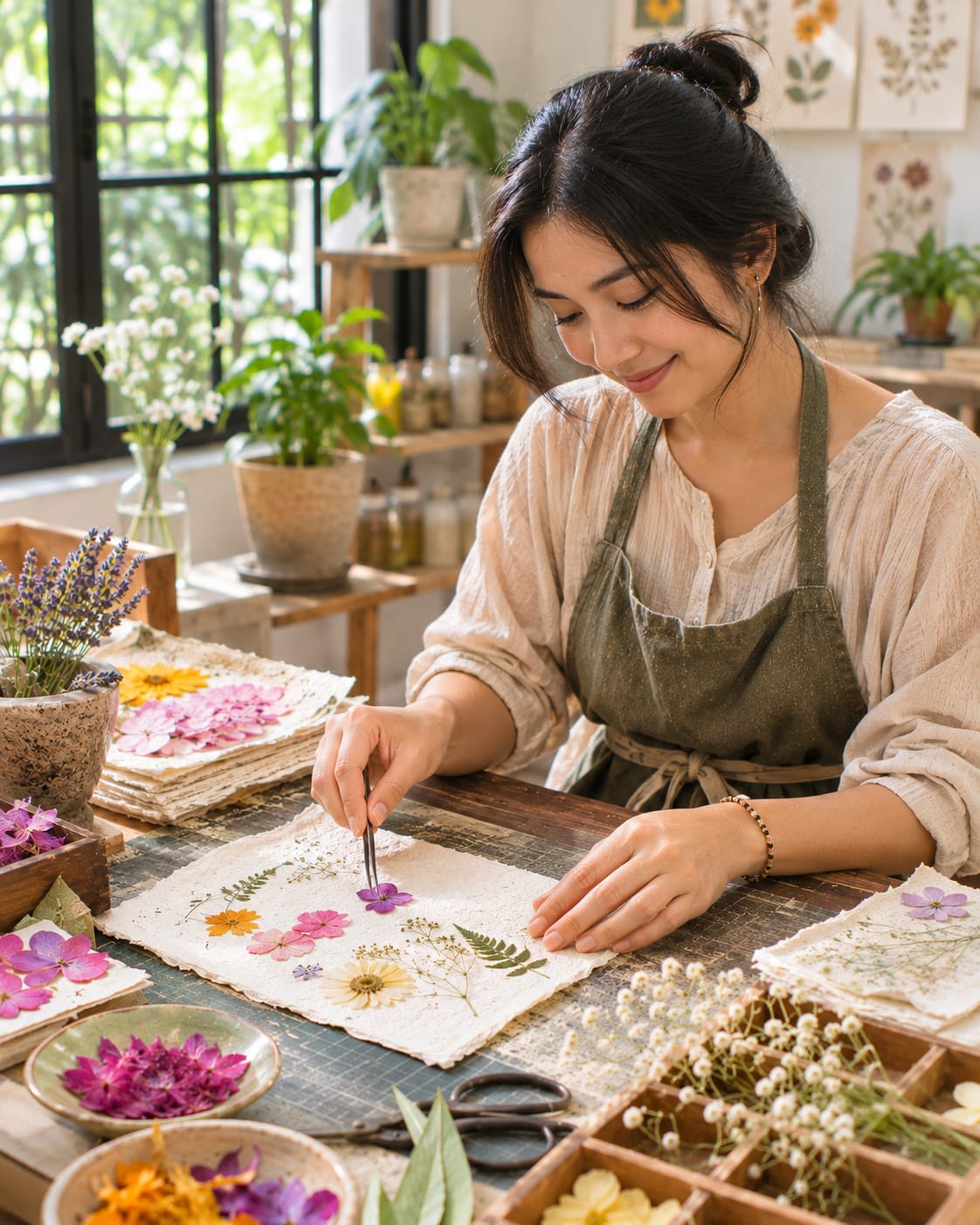
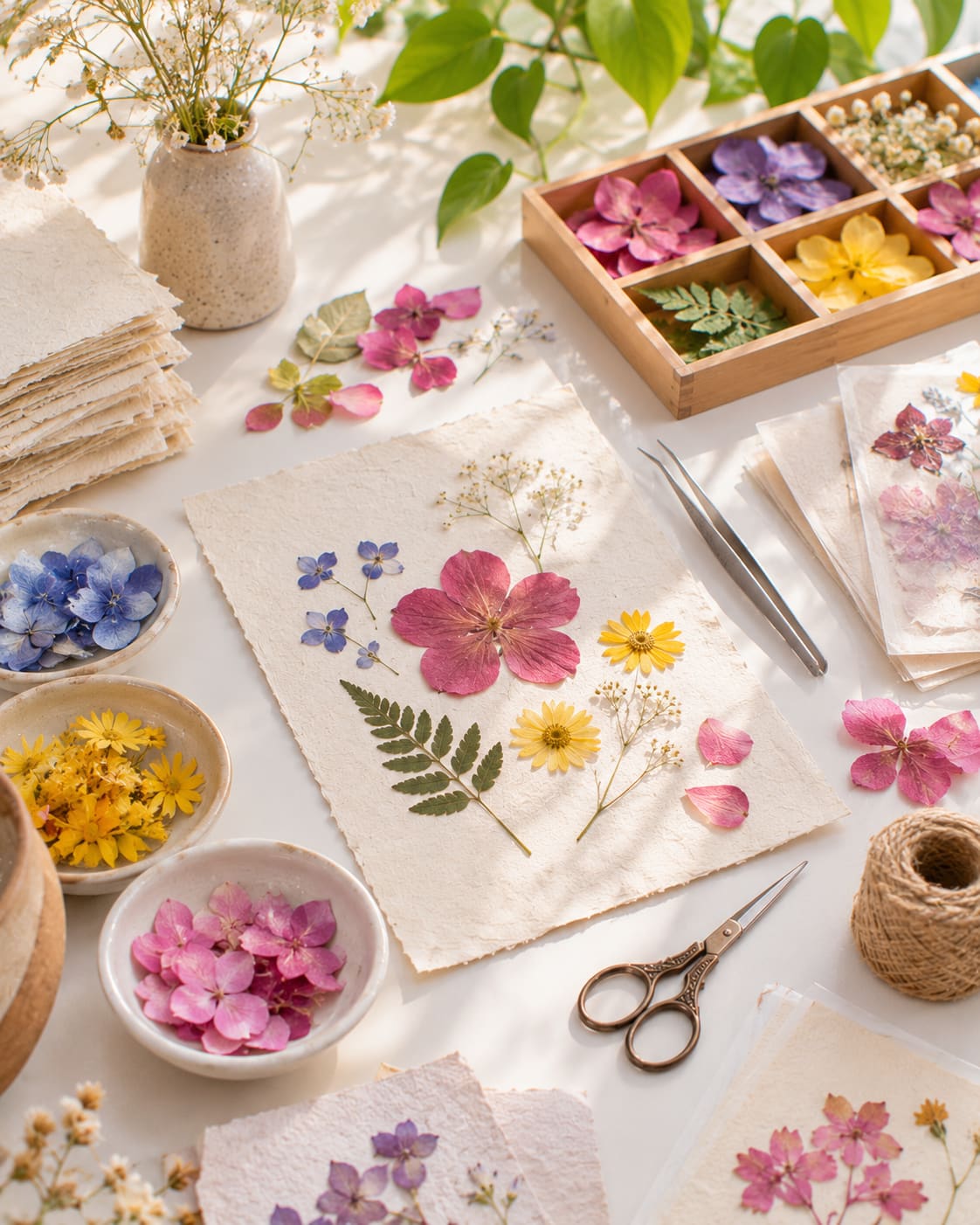
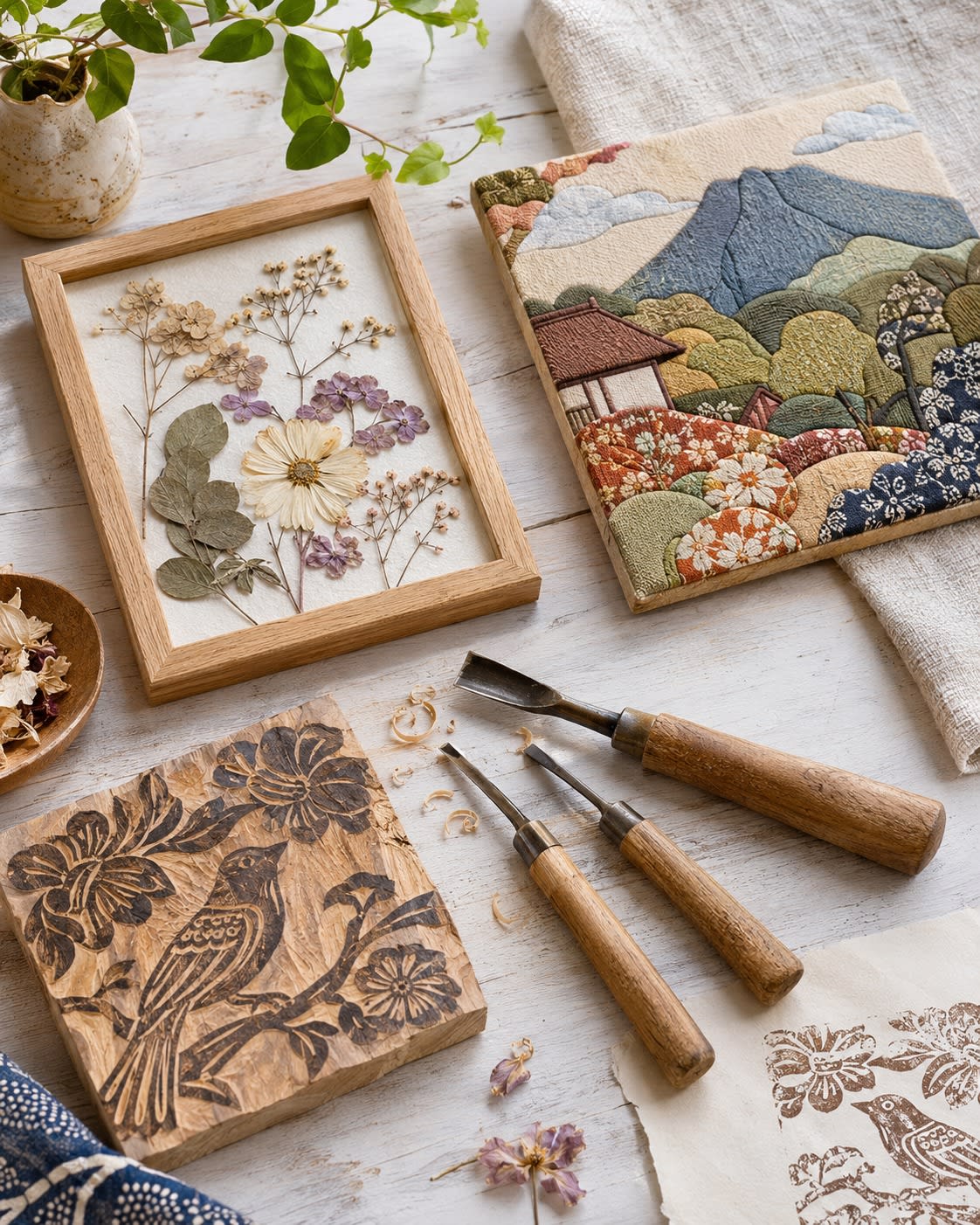
The art of preserving plants, known as pressed flower, is increasingly popular among craft and botanical aesthetics enthusiasts. This process is not merely about drying plants between the pages of a book; it is a visual curation that captures the beauty of nature in two dimensions. One of the main keys to creating durable and aesthetic pressed flower works is choosing the right dried flowers—those with low moisture content and a petal structure that supports pressing.
Not all types of flora can retain their color and shape after pressing. Some flowers will become too damp, rot easily, or turn a dull brown. Therefore, understanding plant characteristics is an essential first step before you start arranging botanical art.
15 Best Types of Flowers and Leaves for Pressed Flowers
To help you start this creative project, here is a list of 15 types of flowers and foliage that produce the most beautiful dried results and are recommended:
- Pansy: Has thin, flat petals that are very easy to press and retain bright color.
- Baby’s Breath (Gypsophila): Its small size and light texture make it perfect as a filler accent.
- Butterfly Pea (Clitoria ternatea): Provides an iconic bright blue color, although it requires extra care during arrangement.
- Bougainvillea: Its paper-like petals are very thin and dry quickly under pressure.
- Aster (Asteraceae): Has a naturally flat shape that makes it ideal for books or dedicated presses.
- Lantana: Its gradient colors produce a highly artistic final visual in botanical frames.
- Fern Fronds: Produce a highly detailed and elegant leaf skeleton pattern as a background.
- Mint Leaves: Besides their fresh aroma, the serrated edges of the leaves are beautifully imprinted.
- Alyssum: Clusters of tiny flowers that provide a dense and sweet texture.
- Cosmos: Has a charming symmetrical shape with warm colors that remain stable after drying.
- Silver Ragwort Leaves: Their feathery texture provides a unique silvery-gray dimension.
- Larkspur: Its elongated shape is excellent for vertical compositions in frames.
- Mini Chrysanthemums: Small chrysanthemum varieties that are not too thick are very good for pressing.
- Verbena Flowers: Their purple and pink colors hold up strongly even after dehydration.
- Clover Leaves: A classic symbol of luck that stays green and neat when pressed dry.
Types of Flowers and Plants to Avoid
Besides knowing which plants are suitable for pressing, you should also recognize which types of flora to avoid so your time and effort are not wasted. Plants with certain characteristics are very difficult to process into high-quality dried flowers:
- Thick, Fleshy Plants (Succulents & Cacti): Have very high water content in their leaf or stem tissues, making them highly prone to rotting, molding, and damaging your pressing paper.
- Dense Double-Layered Flowers (such as Large Roses or Peonies): Their centers are very thick and often turn brown and sticky because they are difficult to dry evenly.
- Flowers with Very Moist Petals (such as Lilies): Their cell structure breaks down easily and leaves wet stains that damage the paper medium.
The key to beautiful pressed flowers is patience in choosing raw materials that are not too wet, along with timely replacement of absorbent paper during the drying process.
Practical Tips for Choosing and Preparing Materials
Before placing plants in the press, make sure you pick them at the right time—in the morning after the dew has evaporated but before the sun becomes too harsh. Avoid picking flowers that are wet from rainwater, as this will slow down the drying process and encourage mold growth. Always use special paper with high absorbency, and place it in a dry, well-ventilated area.
Interested in trying this botanical arranging art for yourself? Join an interactive pressed flower workshop class in Yogyakarta with experienced local artisans, only at Kriyanesa, where creativity and local tradition blend harmoniously.
Try the Creative Experience
More creative experiences with local artisans in Yogyakarta
More Stories
Tim Redaksi Kriyanesa
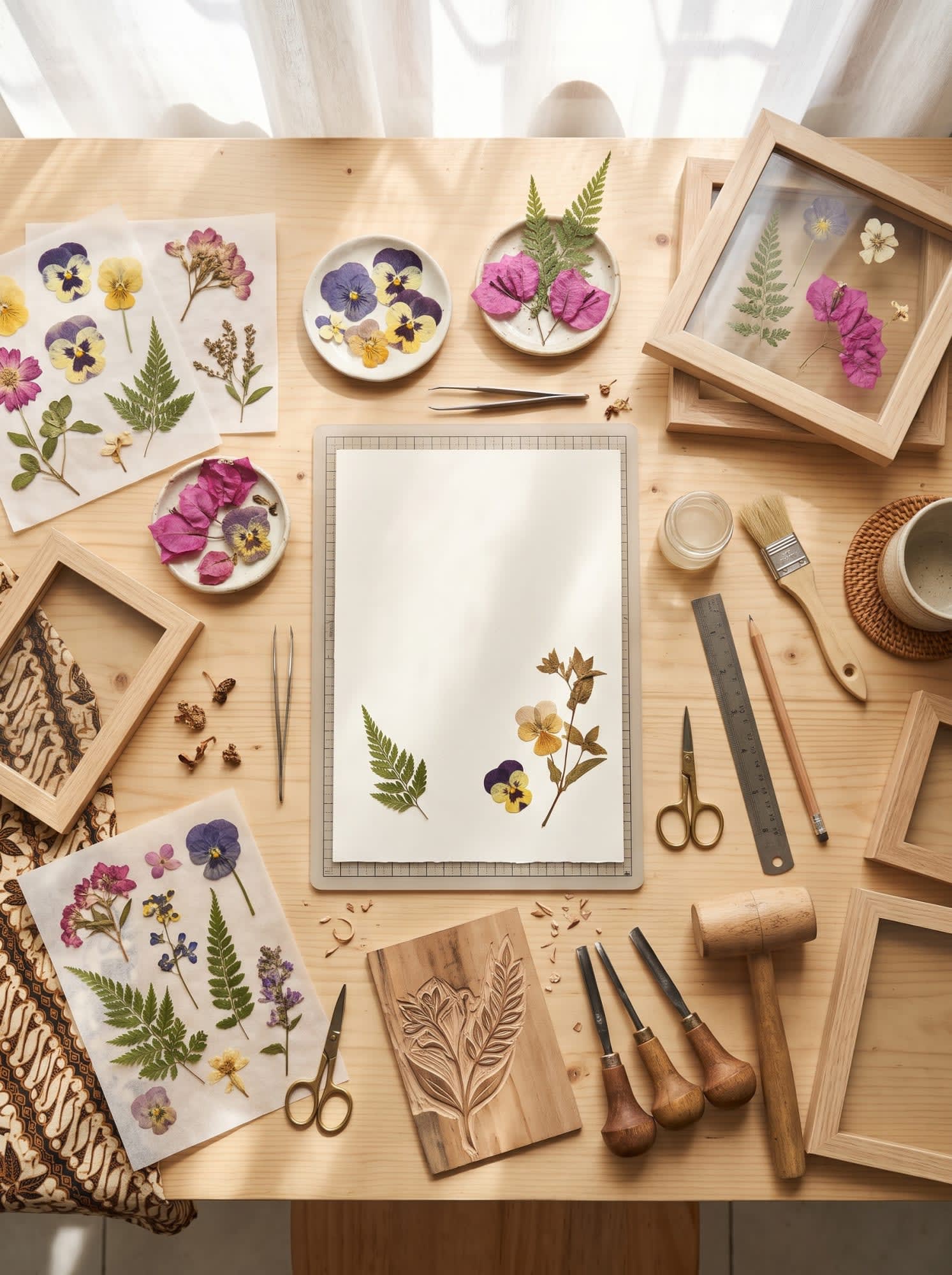
Creative Date Ideas in Jogja: Pressed Flower vs Woodcut, Which Is Right for Your Relationship?
Looking for anti-mainstream creative date ideas in Jogja? Compare the fun of pressed flower and woodcut, and calculate your budget for two here!
Tim Redaksi Kriyanesa