
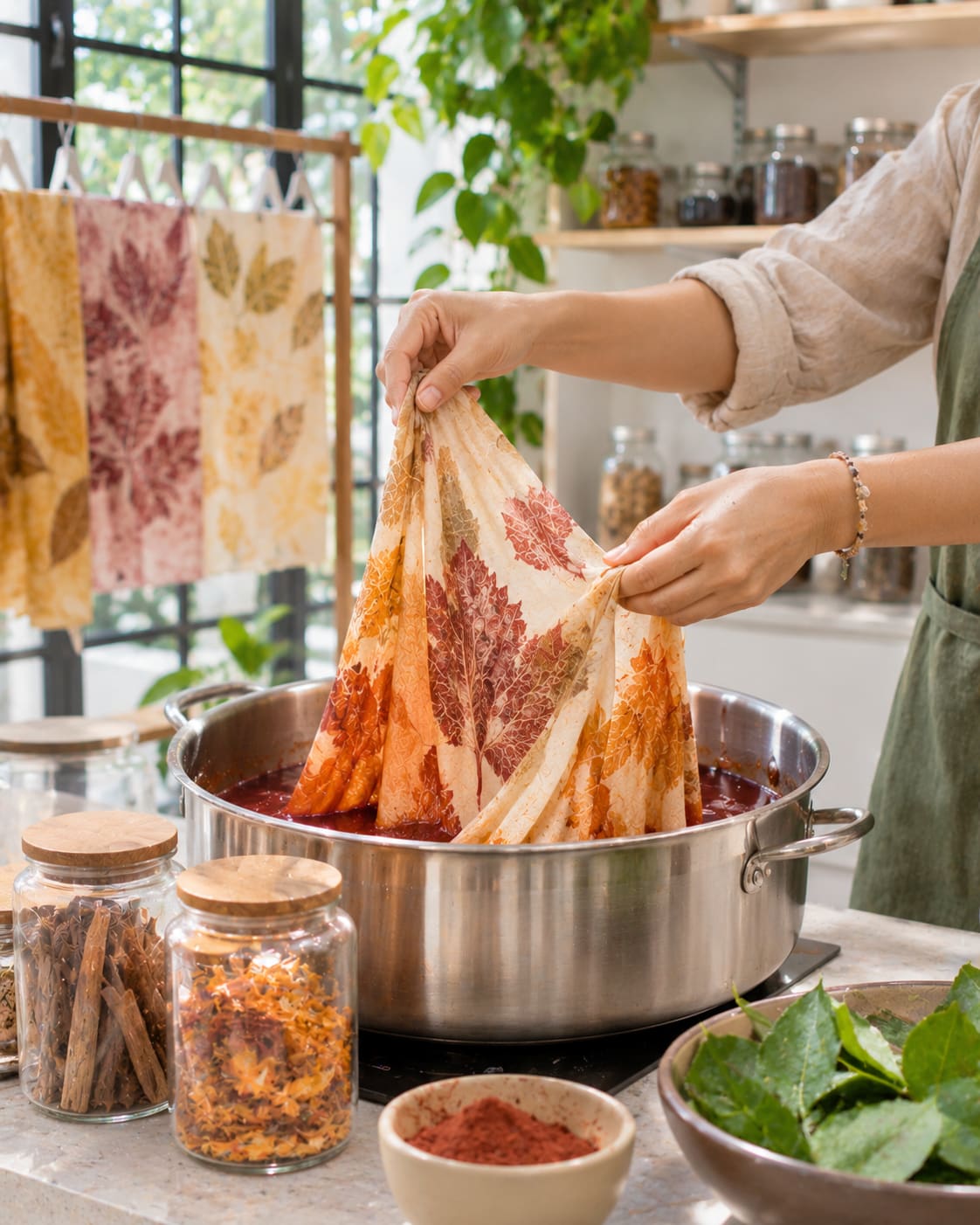
The Art of Natural Dyes from Plants: A Complete Guide to Types, Colors, and Techniques
Tim Redaksi Kriyanesa
November 11, 2026
Discovering the Beauty and Philosophy of Natural Dyes
The world of textile craft is once again turning its gaze toward the botanical riches of the archipelago through the use of natural dyes. Creating color from plant parts is not merely a sustainable fashion trend; it is a form of preserving cultural heritage that honors harmony with nature. Every drop of color produced holds a unique character that synthetic chemicals cannot replicate.
In Yogyakarta and various other craft centers, the exploration of color from nature serves as a bridge between the wisdom of the past and modern creativity. From leaves, bark, seeds, to flowers, all of them offer a rich and calming spectrum of earthy colors.
Plants That Yield Natural Dyes and Their Color Spectrum
Indonesia is rich in flora that can be used as natural color pigments. Understanding the plants and the colors they produce is a crucial first step before beginning the fabric dyeing process.
1. Sources of Yellow and Brown
Tingi bark, avocado, and mango tree leaves are often relied upon to produce warm yellow to golden brown hues. Meanwhile, secang wood provides a distinctive reddish-brown pigment.
2. Sources of Green and Blue
Ketapang leaves can produce an elegant olive green nuance. For the legendary blue color, the Indigofera plant is the main star in the world of traditional textiles.
3. Sources of Red and Purple
Mangosteen rind, secang wood, and several types of roots are able to bring a dramatic spectrum of deep red to purplish tones to fabric fibers.
"Natural dyes teach us to be patient. The color that emerges on the fabric is never one hundred percent exactly the same, because nature always has its own magical touch."
The Important Role of Mordants and Fixation in Natural Dyeing
One of the keys to successfully using natural dyes so they do not fade easily is the process of mordanting and fixation. A mordant is a preliminary substance that opens the pores of the fabric fibers so that the color pigments can bind perfectly.
- Mordanting Process: The fabric is soaked in a solution of alum (aluminium potassium sulfate), tunjung, or slaked lime before the dyeing process.
- Fixation Process (Color Locking): After the fabric is dyed with plant extract, it needs to be soaked in a fixative solution such as alum, slaked lime, or tunjung to lock in and bring out the final color. Tunjung usually gives a dark or deeper effect on the base color.
The Steps of the Fabric Dyeing Process
The process from raw materials to a piece of beautifully colored fabric requires diligence. Here are the basic dyeing stages commonly carried out by artisans:
- Fabric Fiber Preparation: Make sure the fabric (such as cotton or silk) is free of dirt and oil by washing it with lerak or a mild soap.
- Material Extraction: Boil the plant parts (leaves, wood, or fruit rind) in water for several hours until the color is concentrated, then strain out the residue.
- Dyeing: Place the mordanted fabric into the warm color extract solution. Repeat the dyeing several times (up to 3-7 times) to achieve the desired level of color depth.
- Fixation and Drying: Dip the fabric into the fixative liquid, rinse with clean water, then air-dry it in a shaded place so the color is not damaged by direct sunlight.
Advantages and Disadvantages of Natural Dyes vs Synthetic Dyes
Understanding the comparison between natural and synthetic dyes helps us appreciate the value of every piece created.
Advantages of Natural Dyes
- Eco-Friendly: Wastewater from the dyeing process is safe for the ecosystem and does not pollute soil or water.
- Unique Character: Has a distinctive color gradation, gentle on the eyes, and does not easily become boring.
- Safe for the Skin: Very low risk of allergies because it contains no harmful chemicals.
Disadvantages of Natural Dyes
- Longer Time: Requires preparation, extraction, and layered dyeing processes that take time.
- Not Always Consistent: Weather factors, plant age, and water quality can influence the final color result.
Learn Natural Dyeing Techniques Firsthand at a Creative Workshop
Reading the theory of natural dyes is certainly incomplete without practicing it directly. Feeling the texture of the fabric, smelling the aroma of boiled plants, and seeing how color is magically absorbed provide an extraordinary sensory experience.
Interested in trying to blend your own natural colors and create eco-friendly textile works? Come join a class session and learn natural dyeing techniques firsthand with expert artisans in Yogyakarta through a creative workshop at Kriyanesa!
Creative Experiences Now Open
More creative experiences with local artisans in Yogyakarta
More Stories
Tim Redaksi Kriyanesa
Getting to Know Lurik Jogja: History, Classic Motifs, and the Meaning Behind Traditional Weaving
Get to know Jogja lurik fabric: its origins, classic motifs and their meanings, the weaving process, and where to learn directly in Krapyak.
Tim Redaksi Kriyanesa