How to Make Ecoprint for Beginners: 7 Easy Steps with the Steaming Technique
Tim Redaksi Kriyanesa
November 18, 2026
The art of printing natural patterns using leaves and flowers onto fabric is increasingly favored by craft enthusiasts. Knowing how to make ecoprint for beginners is a fun first step to exploring creativity without requiring advanced painting skills. By utilizing the shapes and natural pigments from our surroundings, anyone can produce a unique and aesthetic piece of fabric with botanical motifs.
Tools, Materials, and Fabric Preparation
Before starting the production process, it is important to prepare all the necessary tools and raw materials. The quality of the final result is greatly influenced by the accuracy of selecting the base fabric and leaves.
List of Main Requirements
Natural fiber fabric: Use fabric types that easily absorb color, such as cotton, linen, or silk.
Strongly pigmented leaves and flowers: Choose leaves with clear veins, such as castor bean, kenikir, teak, or papaya leaves.
Mordant: An alum solution for the fabric pre-treatment process so that its pores open and the color can bind well.
Supporting equipment: Raffia string or mattress twine, barrier plastic, PVC pipe or wood as a rolling core, and a large steamer pot.
Preparing the Fabric (Mordanting)
The first step in how to make ecoprint for beginners is to soak the fabric in a water solution mixed with alum for several hours or overnight. This process aims to remove chemical residue from the fabric fibers while helping to lock in the natural leaf colors later.
7 Easy Steps to Make Ecoprint with the Steaming Technique
Once the fabric is ready and has been dried again without rinsing, you can go directly to the motif-printing stage.
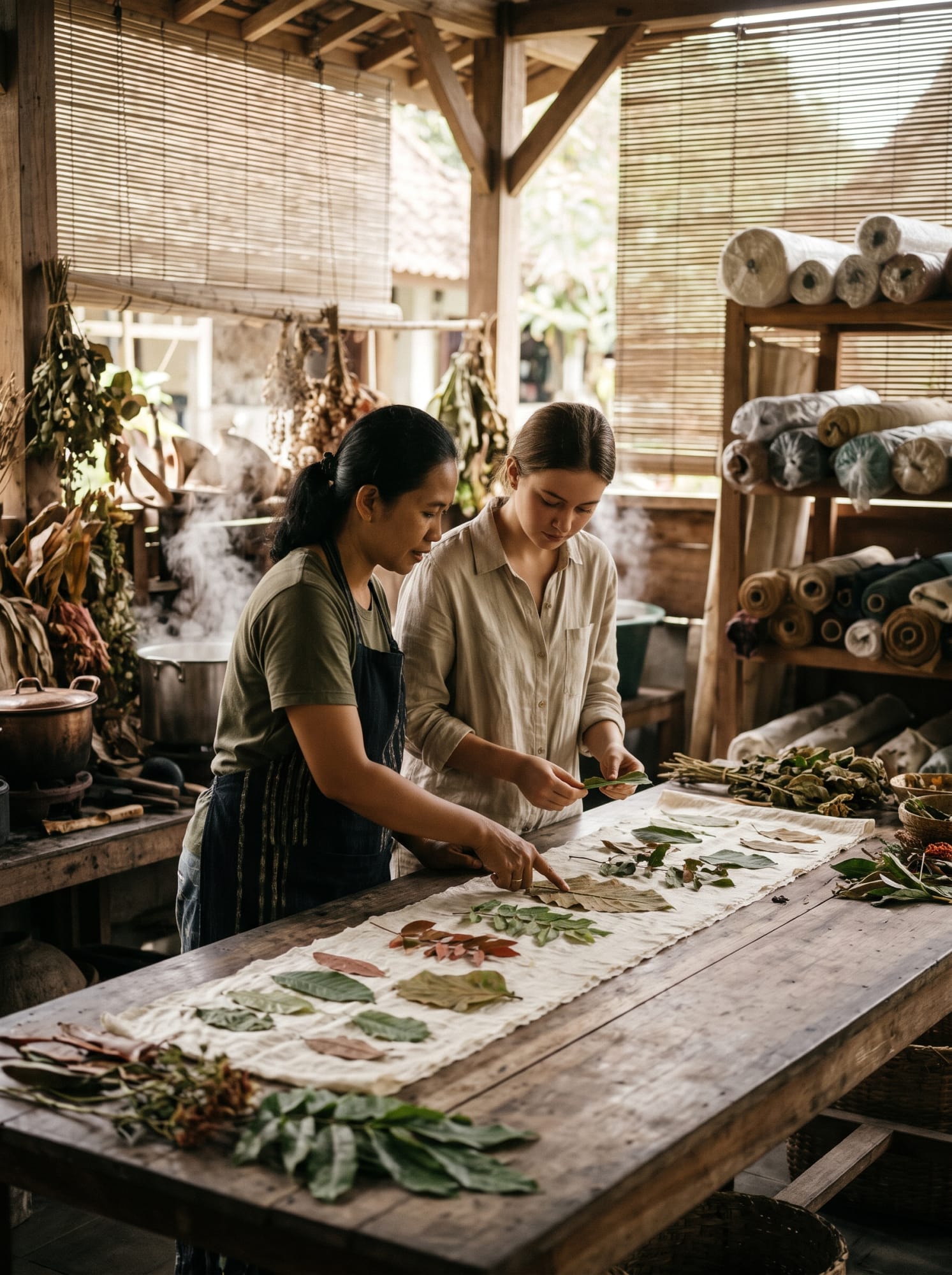
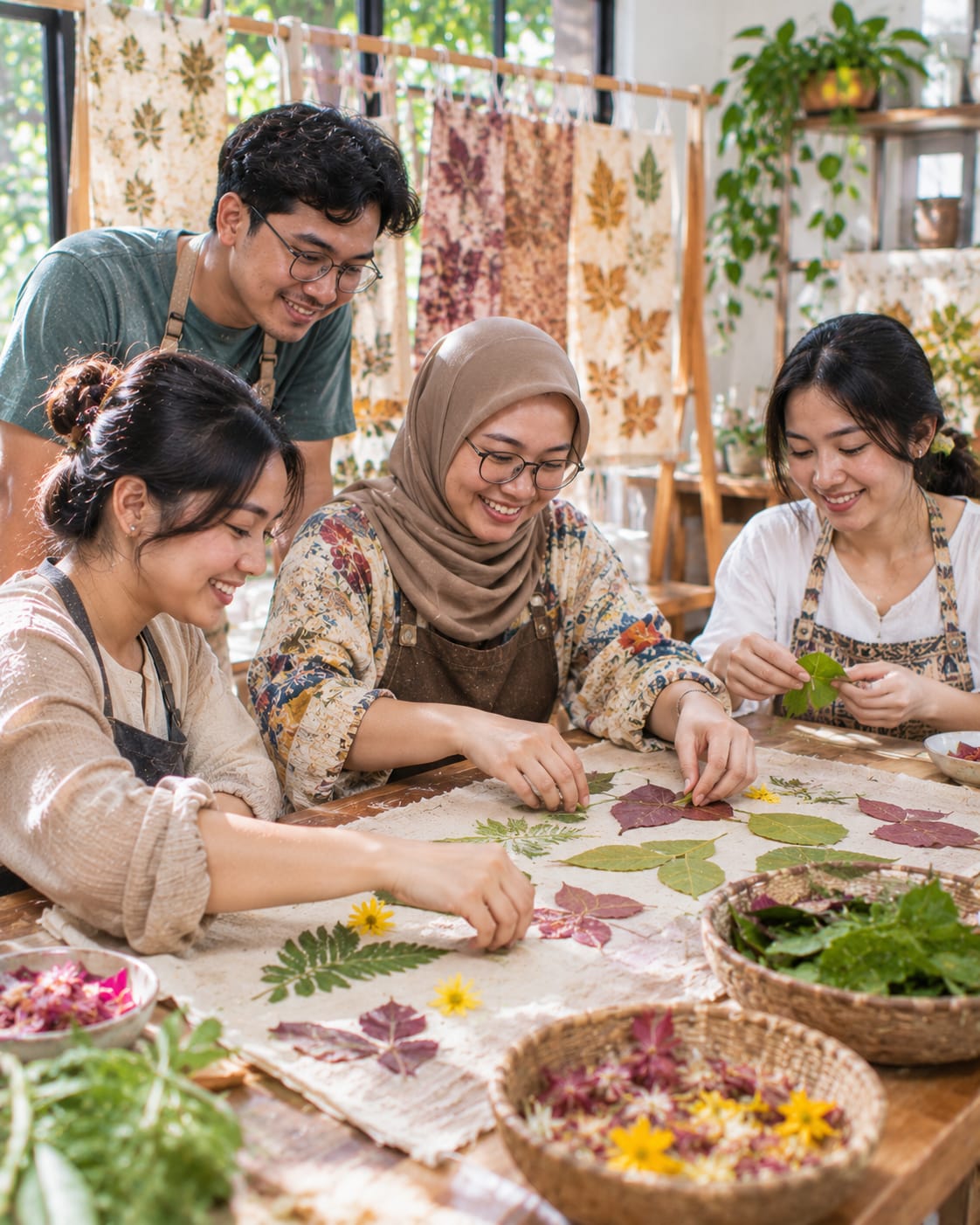
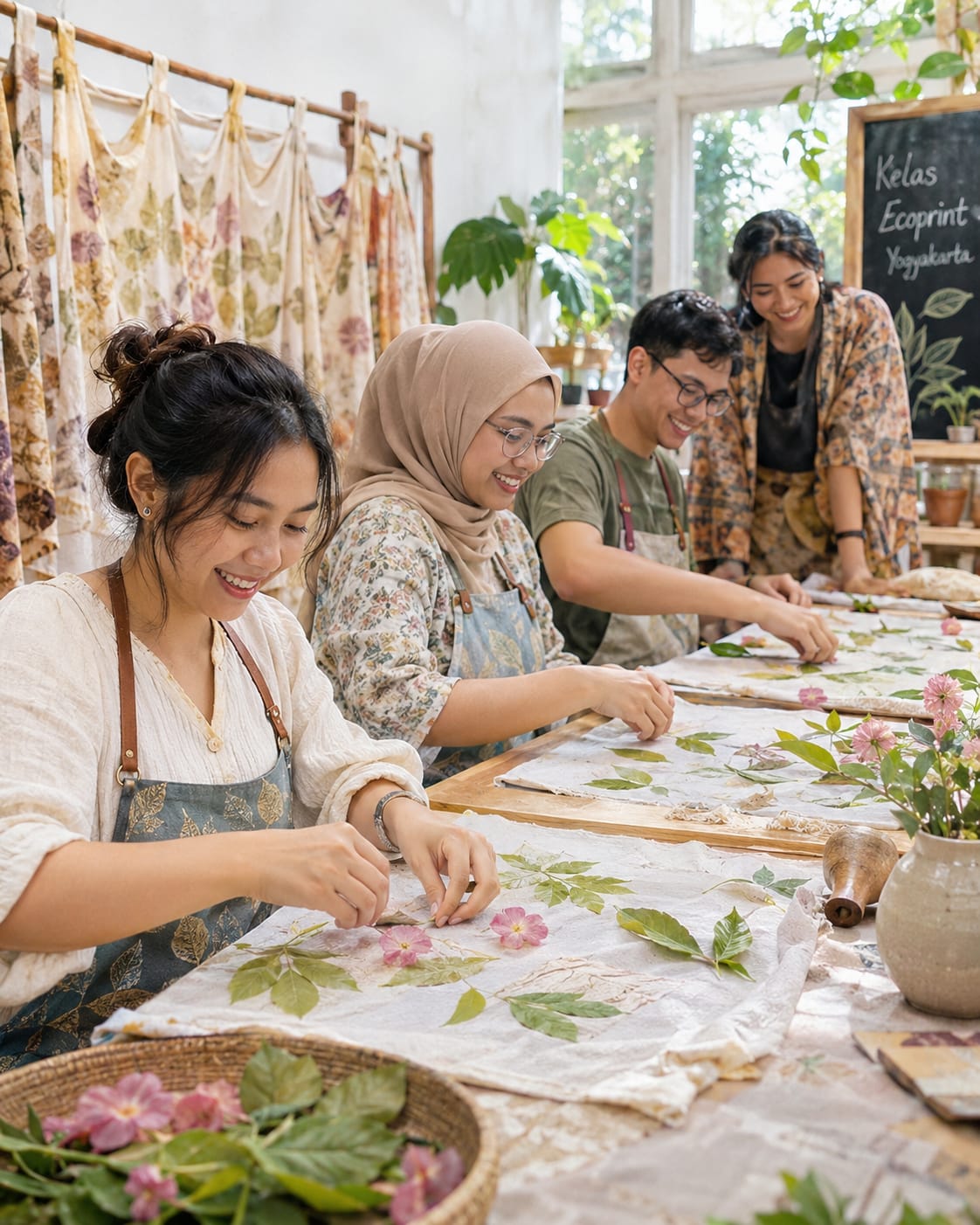
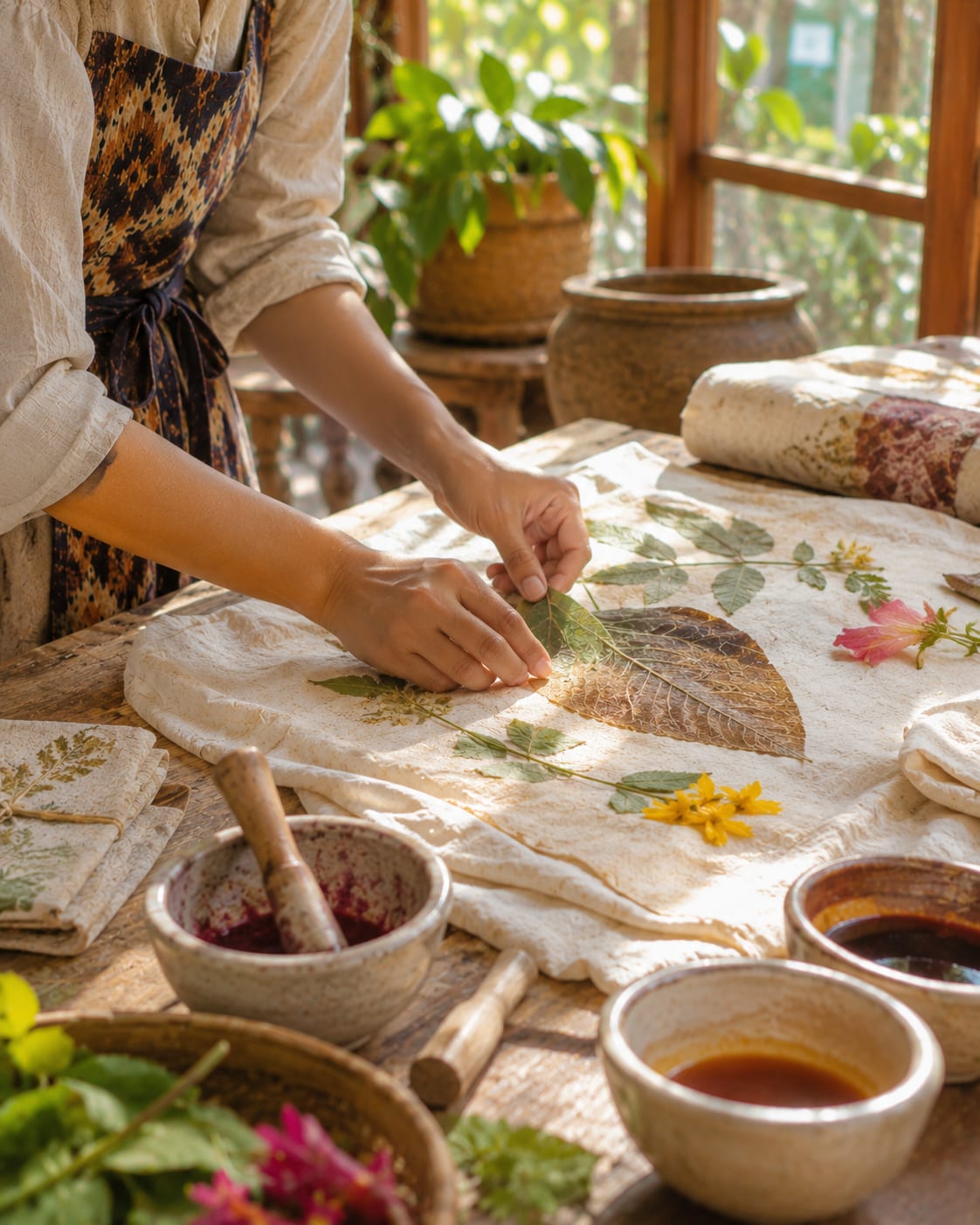
Arranging Leaves on the Fabric: Spread the fabric on a flat table. Arrange the cleaned leaves and flowers carefully on the fabric surface according to the pattern or aesthetic you want.
Rolling the Fabric: Place the PVC pipe at one end of the fabric, then roll the fabric together with the leaves tightly and firmly so that the leaves do not shift during the boiling process.
Tying Tightly: After rolling tightly, tie the fabric roll using mattress twine or raffia in loops at close intervals. The tighter the binding, the sharper the resulting color print.
Steaming the Fabric: Place the fabric roll into a steamer pot whose water is already boiling. Steam over medium heat, kept as stable as possible, for about 2 hours so that the leaf pigments are perfectly absorbed into the fabric fibers.
Opening the Roll: Remove the fabric roll from the steamer and let it cool. Untie the strings and carefully remove the attached leaves to see the beautifully printed botanical motifs.
Fixing the Color (Fixation): To ensure the color and motifs do not fade when washed, briefly soak the fabric in an alum solution or diluted vinegar, then air-dry it in a shaded place.
Final Finishing: Once completely dry, iron the fabric at medium temperature so that its fibers are neat again and it is ready to be made into clothing or fashion accessories.
“The beauty of ecoprint lies in its imperfection; every leaf holds a unique story that a machine can never replicate exactly.”
Interested in directly trying the experience of composing colors from nature and bringing home your own creation? Join our interactive class at Kriyanesa and discover various other exciting craft workshops with experienced local artisans in Yogyakarta!
Creative Experiences Now Open
More creative experiences with local artisans in Yogyakarta
More Stories
Tim Redaksi Kriyanesa
Which Leaves Are Good for Botanical Ecoprint? A List of 15 Leaves and the Colors They Produce
Discover the characteristics of the best leaves, a list of 15 leaf types that produce color for botanical ecoprint, and how to test and collect leaves for beginners.
Tim Redaksi Kriyanesa