Ecoprint: Definition, How to Make It, and Tips for Beginners in Jogja
Tim Redaksi Kriyanesa
November 9, 2026
Getting to Know the Art of Ecoprint: Definition and Philosophy
Textile art continues to evolve by combining aesthetics with environmental awareness. One technique currently favored by craft and sustainable fashion enthusiasts is ecoprint, often called ecoprinting. Simply put, ecoprint is a technique for printing patterns onto fabric using natural materials from nature, such as leaves, flowers, stems, and roots.
Unlike batik or conventional screen-printing techniques that use a canting (batik pen) or synthetic dyes, ecoprint utilizes natural color pigments contained directly in plants. This process produces unique and authentic motifs because the actual shapes of leaves or flowers are printed precisely onto fabric fibers. Through understanding how to make ecoprint for beginners, anyone can create environmentally friendly fashion art that also has high aesthetic value.
A Brief History and Development of Ecoprint
Although it looks modern, this natural dyeing and printing technique is rooted in a long tradition of using nature. The development of modern ecoprint was popularized by Australian textile artist India Flint in the early 2000s. She experimented with rolling leaves and flowers onto wool fabric, then boiling them with foliage to capture natural shapes and colors.
In Indonesia, this technique was quickly embraced by communities, especially textile artisans in Yogyakarta. This cultural city is known for being very open to exploration in fine art and textile craft. The combination of the richness of the archipelago's flora and the creativity of local artisans makes ecoprint one of the craft products with high economic value and environmental friendliness.
Materials and Tools Needed for Ecoprint
Before starting the production process, preparing tools and materials is the key to your work's success. Make sure all the following supplies are available on your workbench:
- Natural Fabric: Use natural fibers such as cotton, silk, linen, or ramie. Synthetic fabrics cannot absorb natural colors from plants.
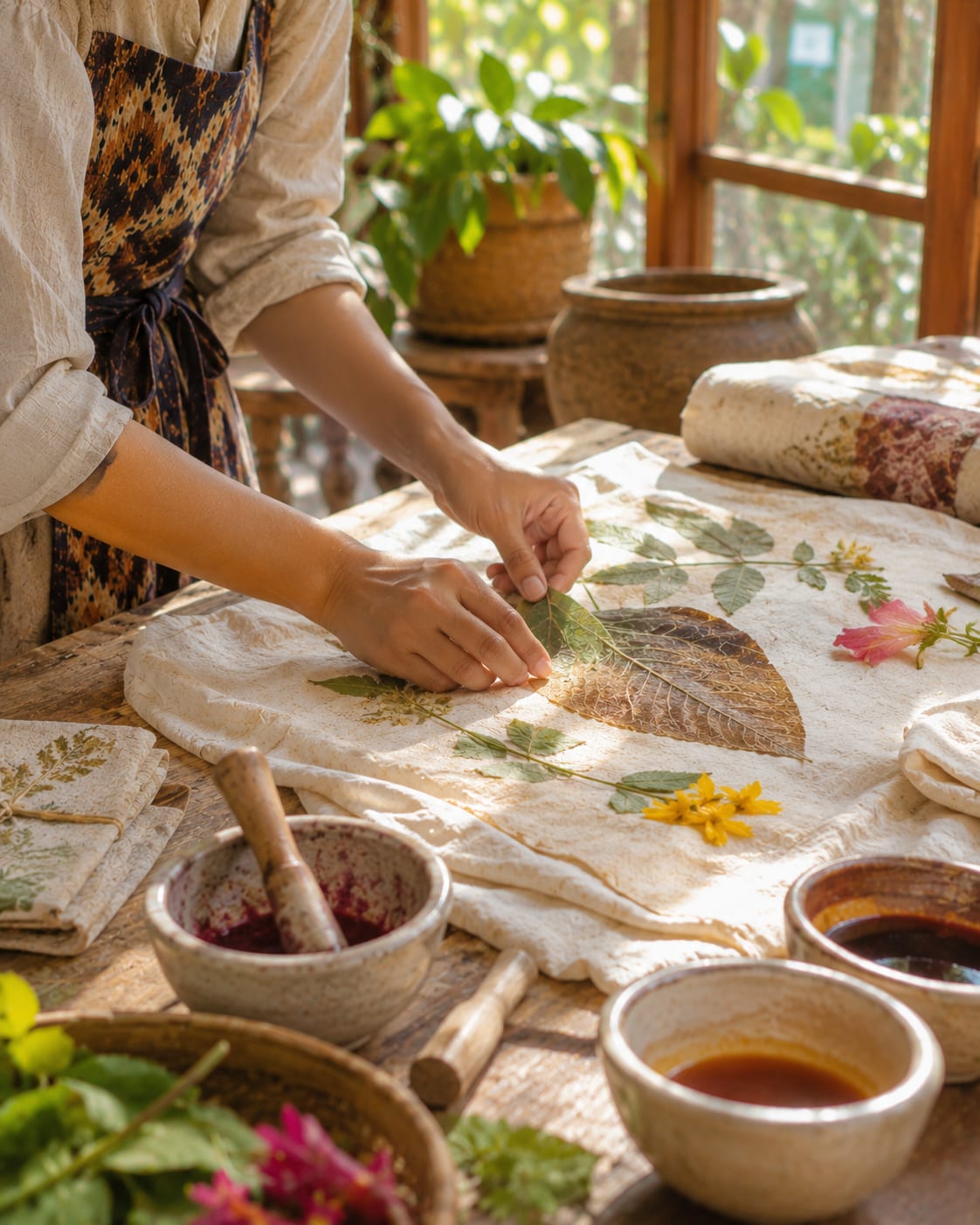
- Plants as Motif Sources: Choose leaves and flowers that have clear shapes and contain tannin or color pigments, such as jarak wuluh leaves, kenikir leaves, papaya leaves, or butterfly pea flowers.
- Alum (Tawas): Serves as a mordant or fixing agent to open the pores of fabric fibers so colors can bind perfectly.
- Tying Rope: Strong mattress cord or raffia string for tying the fabric roll.
- Plastic Mat: As a base when arranging leaves on the fabric so the dye does not transfer to other surfaces.
- Steamer Pot: The main tool for the heating process.
The Best Fabric Choices for Maximum Results
Choosing the type of fabric greatly determines the quality and sharpness of the resulting ecoprint motif. As a beginner, you are advised to understand fabric characteristics before you start printing:
- Cotton Fabric: Very easy to find and comfortable for daily wear, but requires careful mordanting so the colors do not fade easily.
- Silk Fabric: The best medium because the animal fibers in silk can absorb natural dyes maximally, producing very sharp and detailed leaf prints.
- Linen Fabric: Has a unique texture that gives a rustic and elegant impression to the final ecoprint result.
Ecoprint Techniques: Steaming, Pounding, and Boiling
There are several methods commonly used in the ecoprinting process. Each technique gives different characteristics and visual uniqueness:
1. Steaming Technique
This is the most popular and widely used technique. Fabric that has been arranged with leaves is rolled tightly around a pipe or wood, tied firmly, then steamed for about two hours. Heat and steam help open the fabric pores and transfer the color and shape of the leaves perfectly.
2. Pounding / Pledging Technique
This technique is very suitable for beginners or children because the process is quick and interactive. Leaves are placed on the fabric, then gently pounded with a wooden mallet until the sap and leaf color adhere directly to the fabric fibers.
3. Boiling Technique
Similar to the steaming technique, but the fabric roll is boiled directly in boiling water that is sometimes mixed with a tannin solution or additional dye.
Step-by-Step Guide to Making Ecoprint for Beginners
Follow these practical steps to make your first ecoprint piece at home:
- Mordanting Process (Fabric Preparation): Soak the fabric in water mixed with alum and vinegar for several hours, then dry it without rinsing with harsh chemical detergent. This step aims to remove dirt and open the fabric fibers.
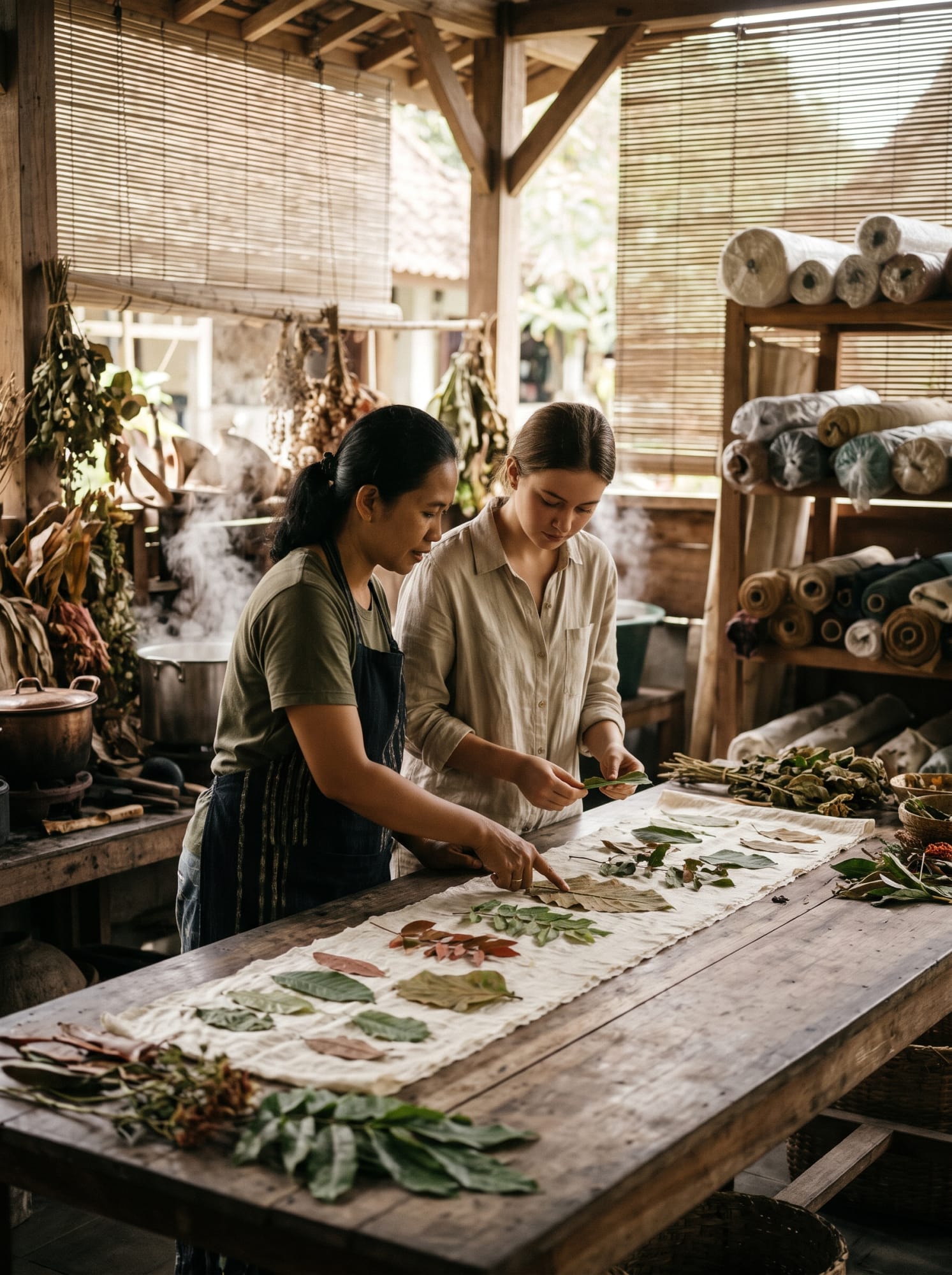
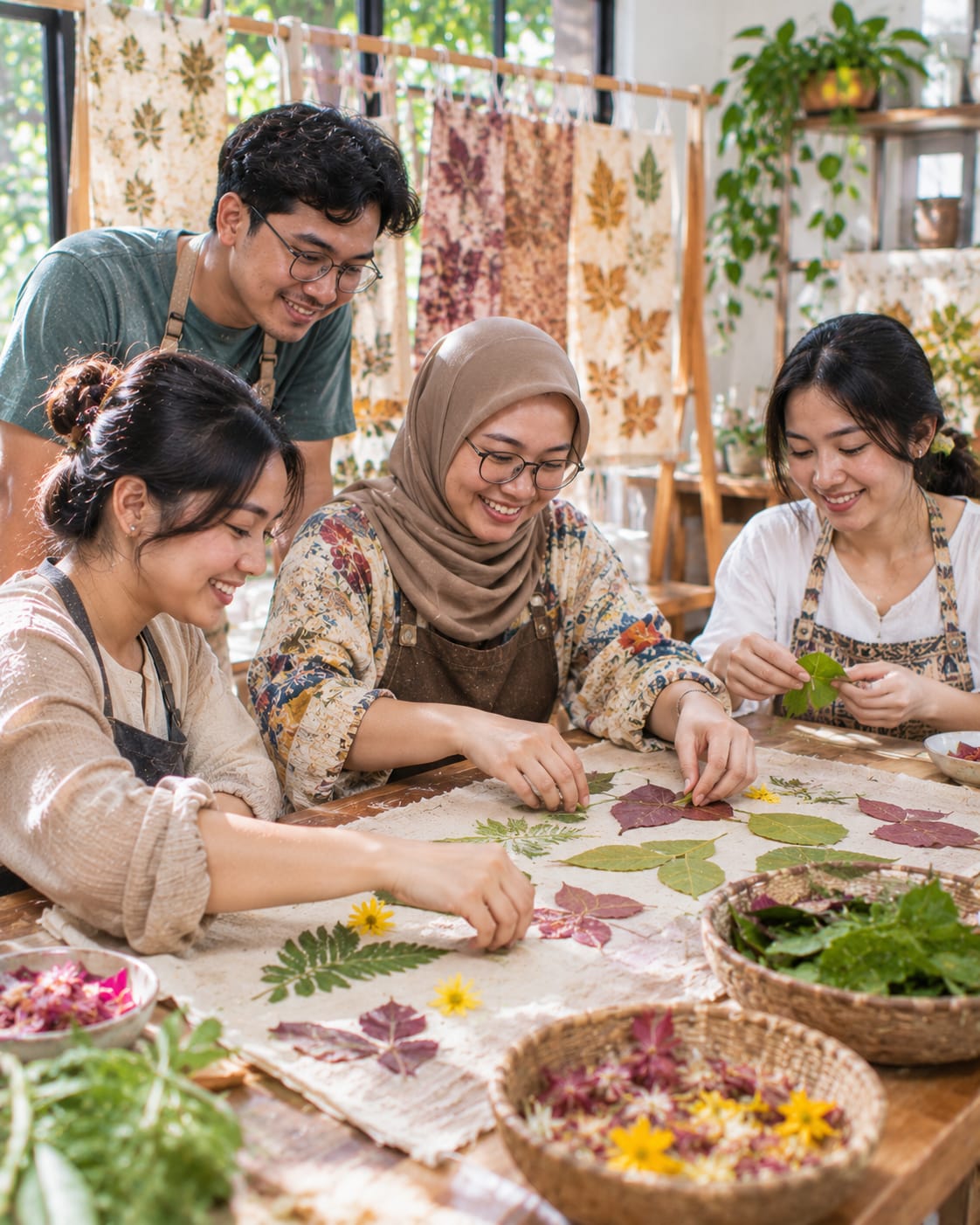
- Arranging the Leaves: Spread the fabric on a flat table. Place the selected leaves and flowers with the undersides facing the fabric (because that side usually releases color better).
- Rolling: Cover the leaves with plastic, then roll the fabric as tightly as possible around a pipe or wood. Tie the roll firmly with rope so no air enters.
- Heating (Steaming): Put the fabric roll into a preheated steamer pot. Steam for about 2 hours over medium heat.
- Final Fixation and Drying: Remove the fabric roll, let it cool, then open it slowly. Wash gently and air-dry the fabric in the shade (not under direct sunlight).
“The beauty of ecoprint lies in its imperfection; nature never creates two leaves exactly alike, and that is where the uniqueness of every piece you make lies.” — Local Textile Artisan
Common Mistakes Beginners Often Make
To ensure satisfying results, avoid these common mistakes:
- Using Synthetic Fabric: Polyester or nylon will not absorb leaf color at all.
- Tying Too Loosely: Loose ties let steam enter and shift the leaf positions, making the motifs blurry or shadowy.
- Choosing the Wrong Leaves: Not all leaves contain color pigments or tannin. Test first with leaf types around you.
How to Care for Ecoprint Fabric
Because it uses natural materials, ecoprint fabric requires special care so the colors last and do not fade quickly:
- Hand wash gently.
- Use lerak (soapnut) or baby laundry soap that is free from harsh chemicals.
- Do not soak the fabric too long in detergent water.
- Dry in the shade and away from direct sunlight so the natural color pigments are not damaged.
Learn to Make Ecoprint Directly in Jogja with Kriyanesa
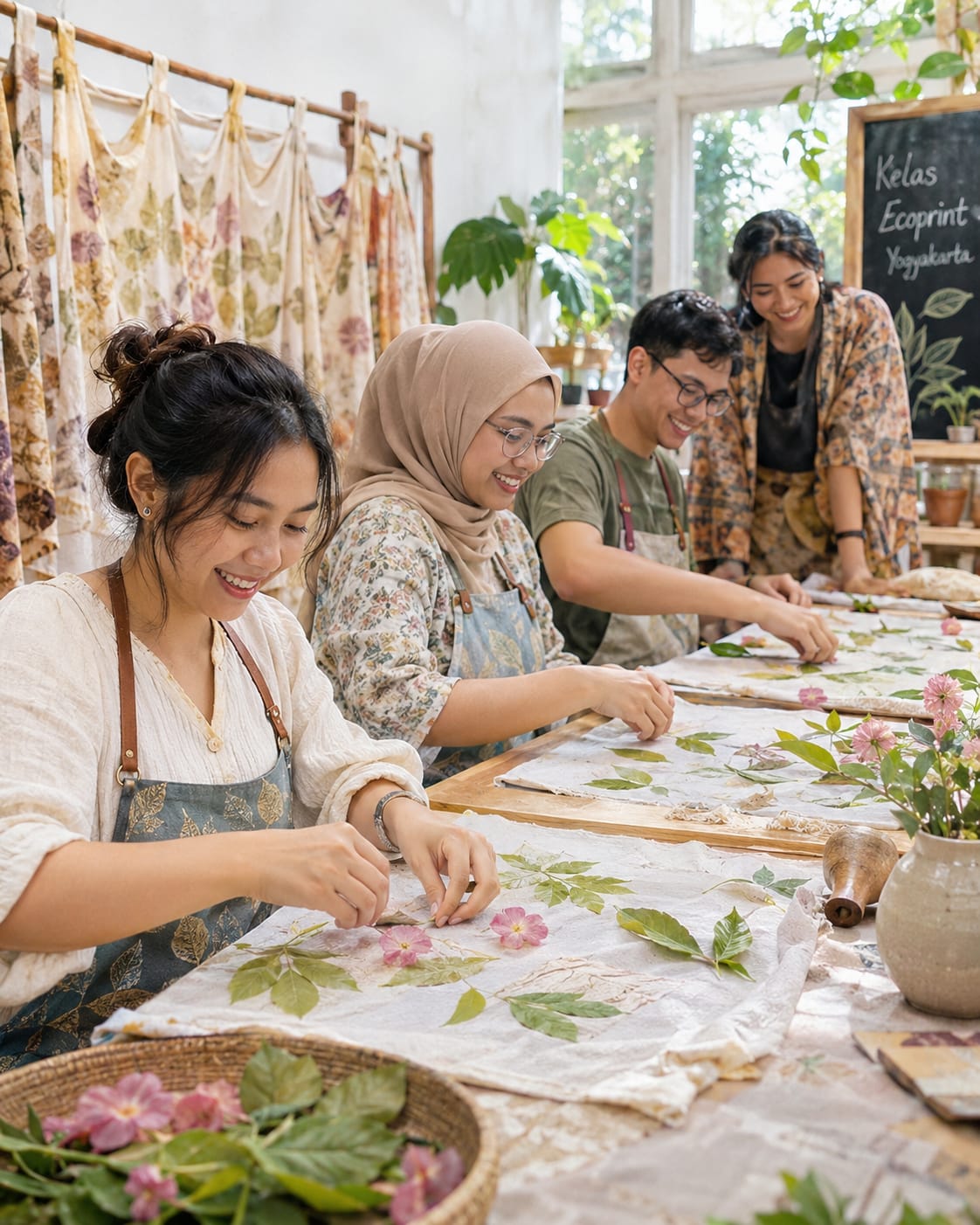
Learning the theory is certainly helpful, but experiencing the creative process of arranging leaves and seeing the miracle of natural colors emerge from fabric gives a much more memorable experience. If you are in Yogyakarta and want to deepen this art directly, join an ecoprint class with experienced local artisans. Find the best creative workshop schedule and start your craft art journey with Kriyanesa today!
Creative Experiences Now Open
More creative experiences with local artisans in Yogyakarta
More Stories
Tim Redaksi Kriyanesa
Which Leaves Are Good for Botanical Ecoprint? A List of 15 Leaves and the Colors They Produce
Discover the characteristics of the best leaves, a list of 15 leaf types that produce color for botanical ecoprint, and how to test and collect leaves for beginners.
Tim Redaksi Kriyanesa